Tectonic shift towards environment
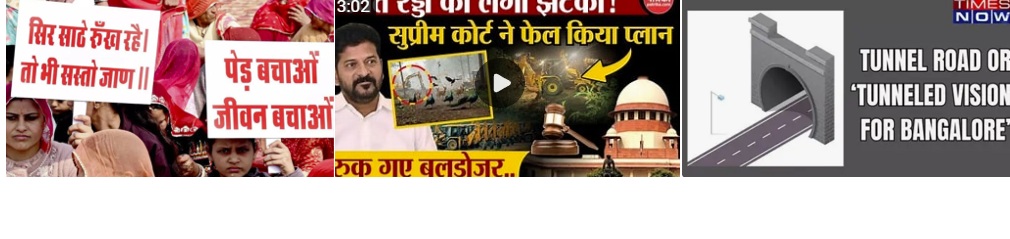
In the last eighteen months, India has seen a series of development projects collide with public sentiment, each exposing how environmental concerns are reshaping the political and social landscape.
- The underground tunnel project at Lalbagh, proposed by Deputy CM D.K. Shivakumar, is on hold after fierce resistance from citizens and BJP MP Tejasvi Surya. The project is sensitive because it risks damaging the ancient Lalbagh Rock, a geological formation over three billion years old, making it an environmental flashpoint.
- The Aravalli mining project, initially proposed by the Government of India and partially cleared by the Supreme Court to allow hill mining up to 100 meters, met with widespread public agitations. The young generation across communities led a faceless resistance, while the Congress in Rajasthan tried to capitalize on the sentiment.
- The proposal to cut down 18,000 trees in Tapovan—translated as sacred forest land for meditation and revered as the place where Lord Ram stayed during exile—faced public wrath. Many saw it as destruction of nature for the Kumbh Mela, against the very principles of Sanatana Dharma. Though opposition parties supported the agitation to corner BJP, the protest largely remained non‑political, and attempts by the ruling party to discredit it failed.
- Plans to cut down Khejri trees for a solar power project—ironically an environment‑friendly initiative—sparked a statewide campaign to protect the holy tree. With its distinct ecological value and deep cultural identity, the issue transcended development policy. More than 300 sadhus went on hunger strike, and even BJP leader Vasundhara Raje supported the agitation. This rare political convergence forced the chief minister to put the project on hold.
- In Telangana, nearly 100 acres of forest land in Kancha Gachibowli, near Hyderabad, were flattened overnight. The Supreme Court took suo motu cognizance, describing the incident as an alarming picture of governance failure. It ordered the state to restore the forest and warned senior officials of arrest if compliance was not ensured. The case underscored how judicial intervention has become a critical check against reckless state‑level decisions that bypass environmental safeguards.
Across these five events in the last 18 months, two common threads stand out: public sentiment against environmental destruction has cut across social and political divides, and governments, despite elaborate paperwork and defenses, have had to surrender or stall projects.
For decades, Indian politics revolved around Mandal, Kamandal, and their religious variants. But the younger generation is clearly shifting the axis. Education, unemployment, and the economy remain central, yet climate and environment are no longer abstract topics for global forums—they directly affect daily bread and butter.
This marks the beginning of a tectonic shift in social preferences. Hopefully, state and central governments across political lines will stop tweaking policies, de‑notifying protected regions, grabbing forest and mangrove lands, and instead follow the recommendations of environmentalists like Madhav Gadgil, protect the ghats, and above all, refrain from boasting about projects such as the Mumbai Coastal Road—built by destroying 45,000 mangroves and justified through fraudulent claims before the Supreme Court.

