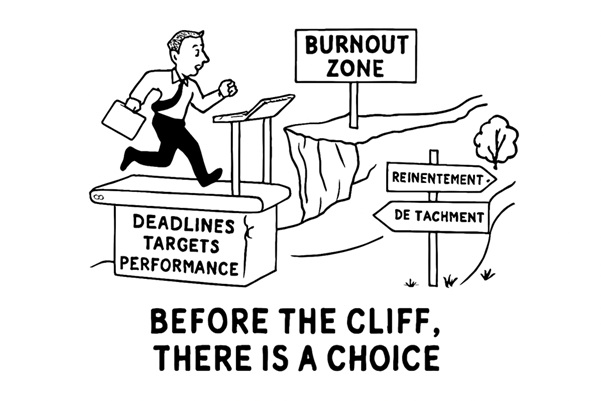
Work-life balance is the buzzword we hear constantly in corporate circles. Emotions around this term run high, especially when top-tier industrialists and business leaders advocate for long working hours—and rightly so, the younger generation, no longer willing to play the subjugated “yes-sir” role, has pushed back.
Theory aside, I often encounter mid-career professionals who appear outwardly successful—holding critical positions and earning well—yet are internally broken. Statements like “I want to cry…”, “Money isn’t a problem for me, but…”, or “There’s too much stress in this job, why am I still here?” stir something deep within me.
Having faced turbulent phases myself, as most professionals do at some point, I can distinguish between routine job frustration and the moment someone crosses a threshold that demands attention. I also observe certain career success stories where individuals continue in corporate roles—not as business owners—but because the job fulfils an emotional need. For some, work becomes an escape from a strained family life. This isn’t workaholism or passion-driven engagement; it’s something else entirely.
And then, suddenly, you realize the companies you gave your best to didn’t deserve it. Some shut down, others changed management, and many were swept away by unforeseen forces—taking a toll on your career and life.
We need to broaden our understanding of life beyond just family time or socializing with friends. Though well-researched and frequently discussed, one principle remains under-practiced: investing in yourself. You must cultivate a third dimension—beyond job and family—your own space, your hobbies, your choices, over which only you have control.
True work-life balance requires emotional detachment from work, while staying professional, active, and high-performing. This echoes the teachings of the Gita—Hindu philosophy that urges us to act with full sincerity but without attachment to outcomes. In agrarian economies, work and life were fully intertwined. The industrial revolution introduced structured work hours and overtime. But subsequent revolutions—and their ripple effects across legal, social, and financial domains—have ushered in uncertainty, where anything can become obsolete overnight. The pressure now is to remain perpetually productive.
Business leaders and policymakers must eventually ask whether the relentless pursuit of productivity aligns with quality of life. If not, then as individuals, we must create our own opportunities. We must practice detachment, as the Gita taught Arjun—engage fully, but do not be consumed.
If you’re young, focus on building skills, nurturing hobbies, and maintaining physical well-being—rather than burning the midnight oil. If you’re retired, seek a meaningful cause rather than clinging to job extensions. And if change feels overwhelming, start small. As James Clear’s Atomic Habits reminds us, transformation begins with tiny, consistent steps that compound over time.
In a cutthroat environment that chips away at your career daily, this may sound difficult. But before AI and technology reinvent the world around you, you must reinvent yourself. Otherwise, beneath the surface of a seemingly stable economic order, more voices will emerge—suffocated, unheard, and desperate to cry out.
 Bol Madhavache
यावर आपले मत नोंदवा